

What you’ll achieve
A reseller experience where resellers open a live pipeline of the deals attributed to them, see only the fields you intend, and edit only the fields they own, with every change writing straight back to your CRM and everything else read-only.Before you start
1
Attribute deals to the reseller
Deals must be attributed to the reseller so they appear in the reseller’s pipeline. See Configure deal attribution.
2
Have a reseller experience
An experience shared with resellers should already exist in the Experience builder.
Watch it
- Video
- Click through
Steps
Add the reseller pipeline view
1
Open the reseller experience
Go to Experience builder and open the experience shared with resellers. This is where you add the pipeline and configure the deal embed resellers will use.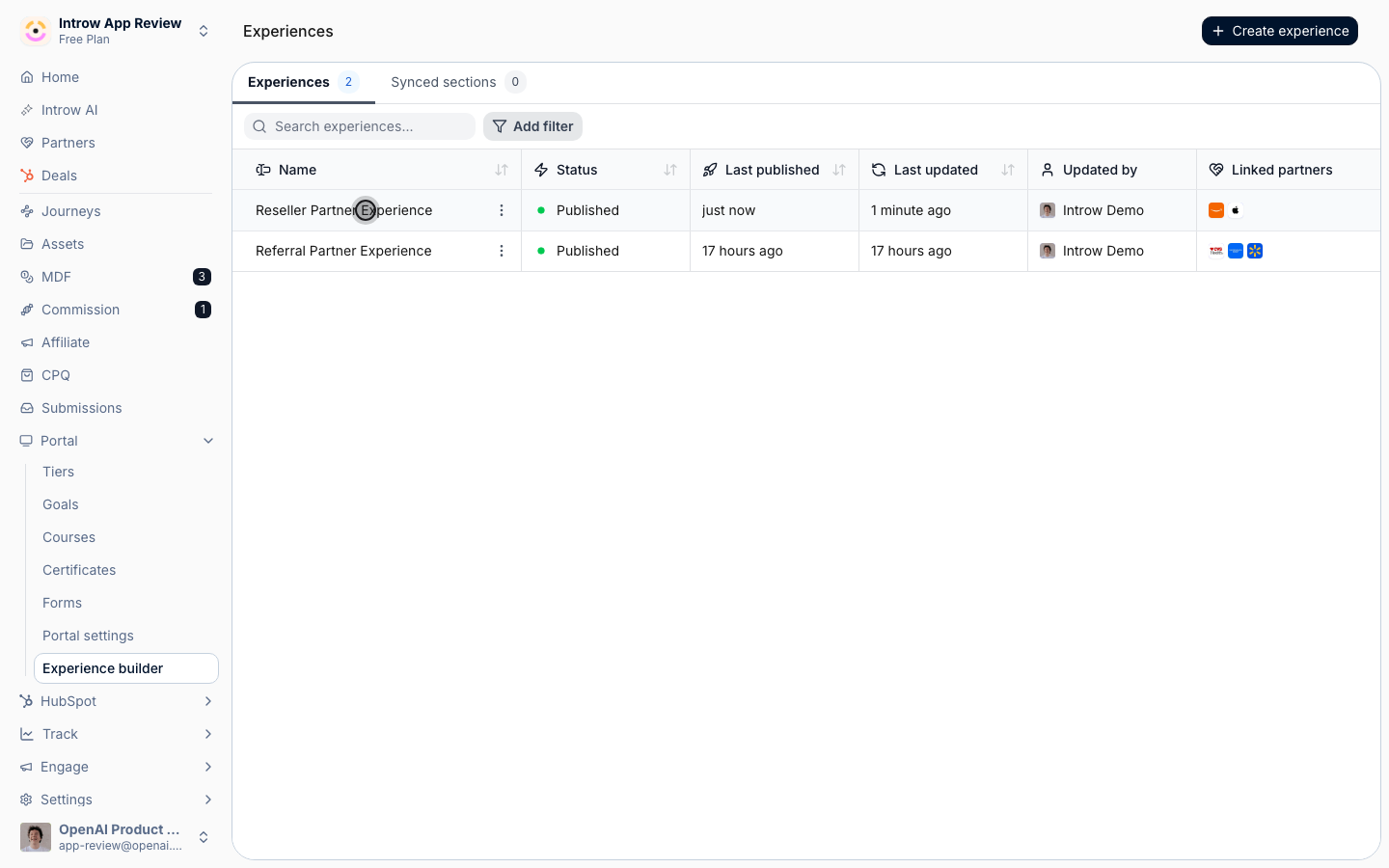
2
Add a deal pipeline and filter it
Add a CRM deal pipeline to the experience so resellers see the deals attributed to them. Then narrow it so the view is focused: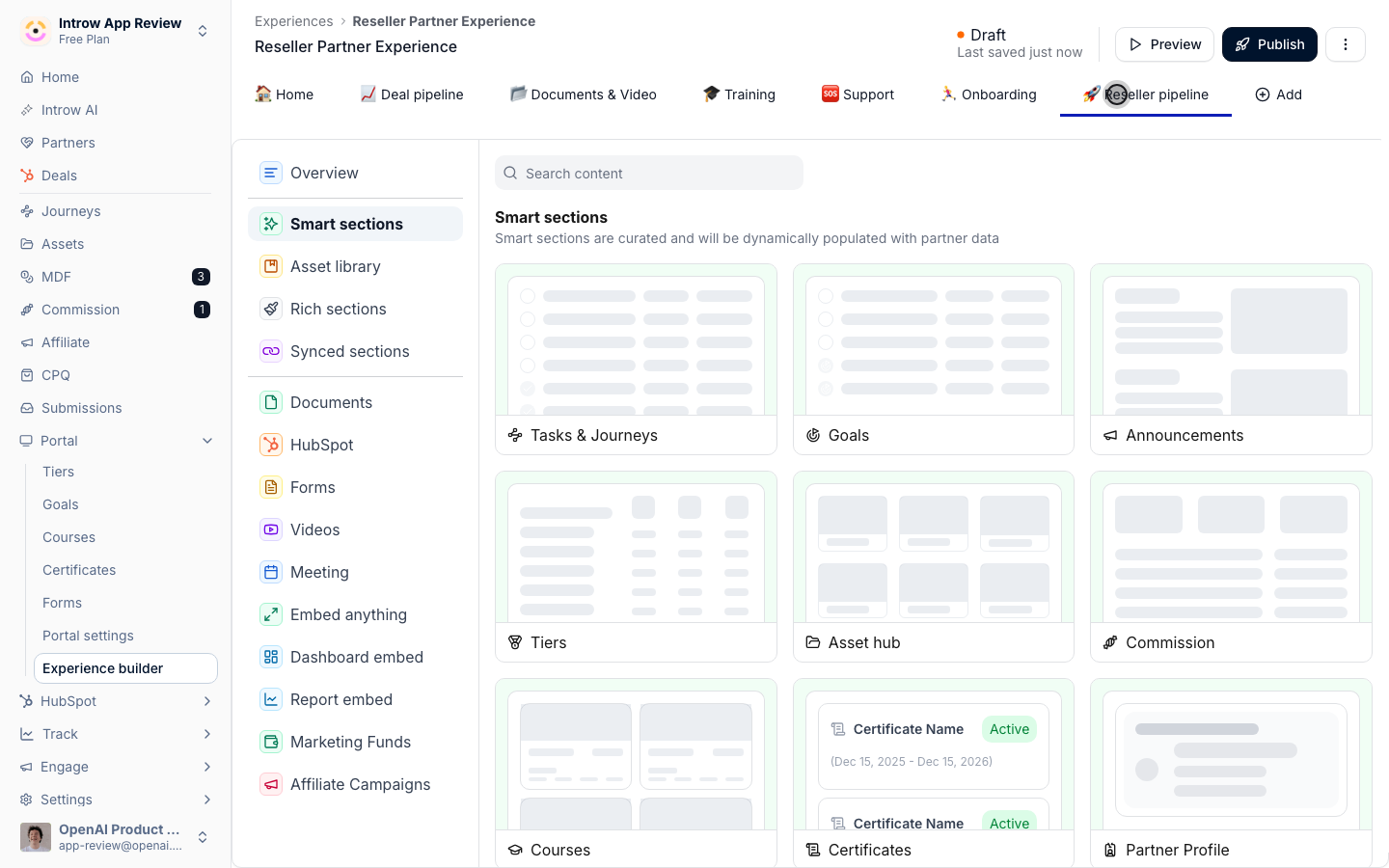
- Pipeline - choose the deal pipeline resellers work from. Attribution decides which deals each reseller sees, so a reseller only ever sees their own.
- Filters - limit the view to the right records, for example a deal stage or deal type, so resellers see the deals that need action rather than everything.
Choose what resellers can see
1
Open the deal embed properties
Open the CRM deal embed and go to its Properties configuration. This is where you pick the fields a reseller sees on each deal. A field must be visible here before it can ever be made editable, so visibility is where scoping starts.
2
Set the visible properties
Choose the fields resellers should see and remove anything internal or sensitive:
- Visible fields - add the properties a reseller needs for context (next steps, close date, amount, stage) and leave out internal notes, margins, or forecast fields.
- Related items - decide whether related records such as contacts or line items appear, keeping internal detail out of view.
Choose what resellers can edit
1
Allow editing per field
Still on the deal embed’s Properties configuration, each visible field carries a control to Allow partner to edit or keep it view-only. Mark the fields a reseller owns as editable:
- Editable fields - turn on Allow partner to edit for the fields the reseller should keep current (next steps, close date, partner-specific fields). Their edits write back to your CRM.
- Read-only fields - leave everything else view-only so sensitive fields stay protected even though the reseller can see them.
2
Publish the experience
Publish so resellers see their pipeline, the fields you chose, and the editable fields in the portal.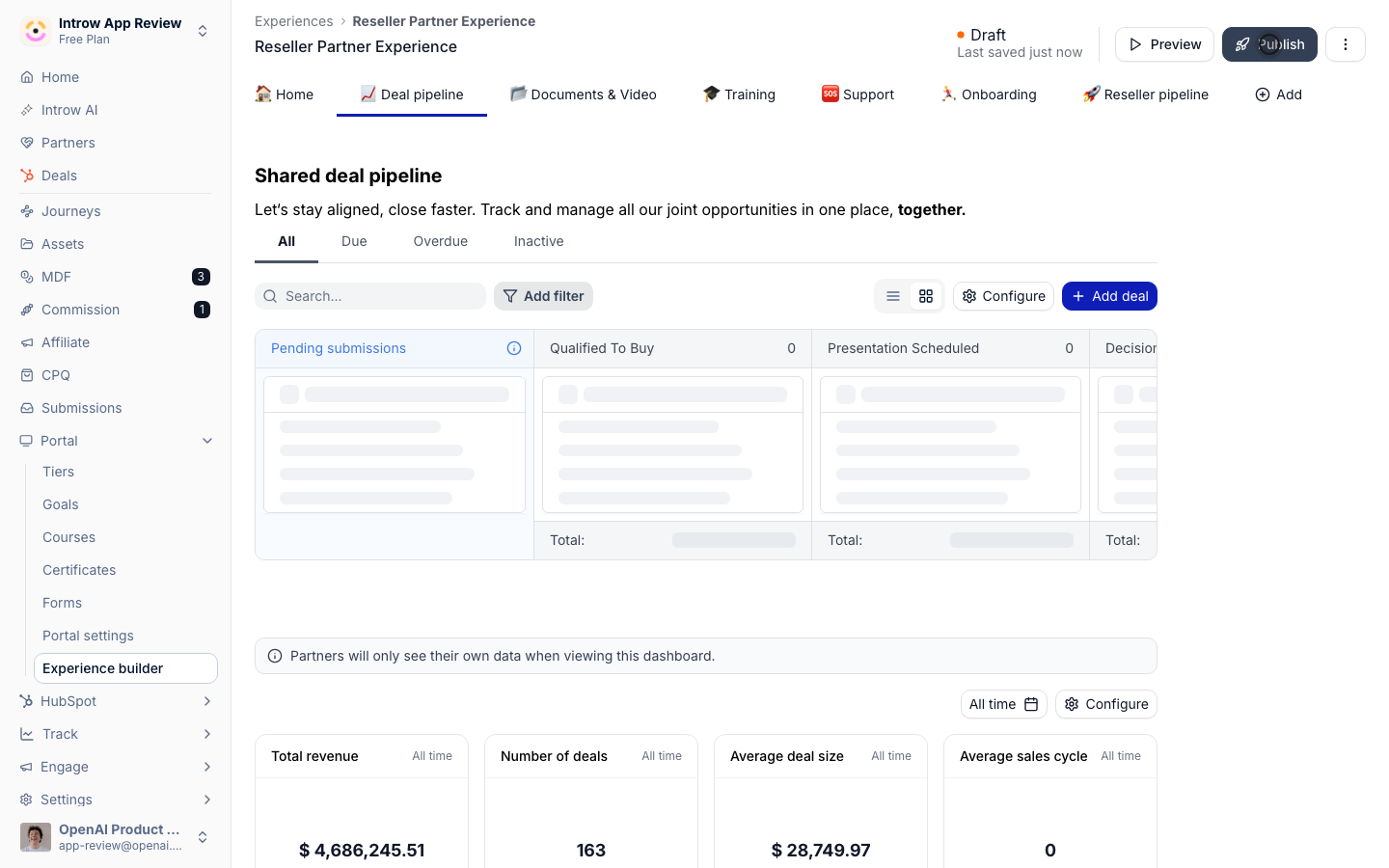
Verify it worked
Sign in as the reseller and open the portal. Confirm the pipeline shows only the deals attributed to them, each deal opens to show only the fields you made visible, and only the fields you marked editable can be changed. Edit one editable field and confirm the change appears on the deal in your CRM.
Related
Quote on a reseller deal
Let resellers run line items and quotes on the deal.
View the partner pipeline
The canonical shared-pipeline setup.
Comment on a record
Collaborate with the reseller on the deal.
Implementation reference
Full configuration options.