

What you’ll achieve
A static segment containing exactly the partners and contacts you chose, with collaboration permissions and notification behavior set for that group. The list stays fixed until you change it, and every feature pointed at the segment treats precisely that group the way you intend.Before you start
1
Confirm access
You need access to segment settings.
2
Know the members
Have the partners (and the specific contacts) you want in mind, since a static segment is the exact list you pick.
Watch it
- Video
- Click through
Steps
1
Start a new segment
Go to Segments and create a new segment. The segment editor opens on the General tab.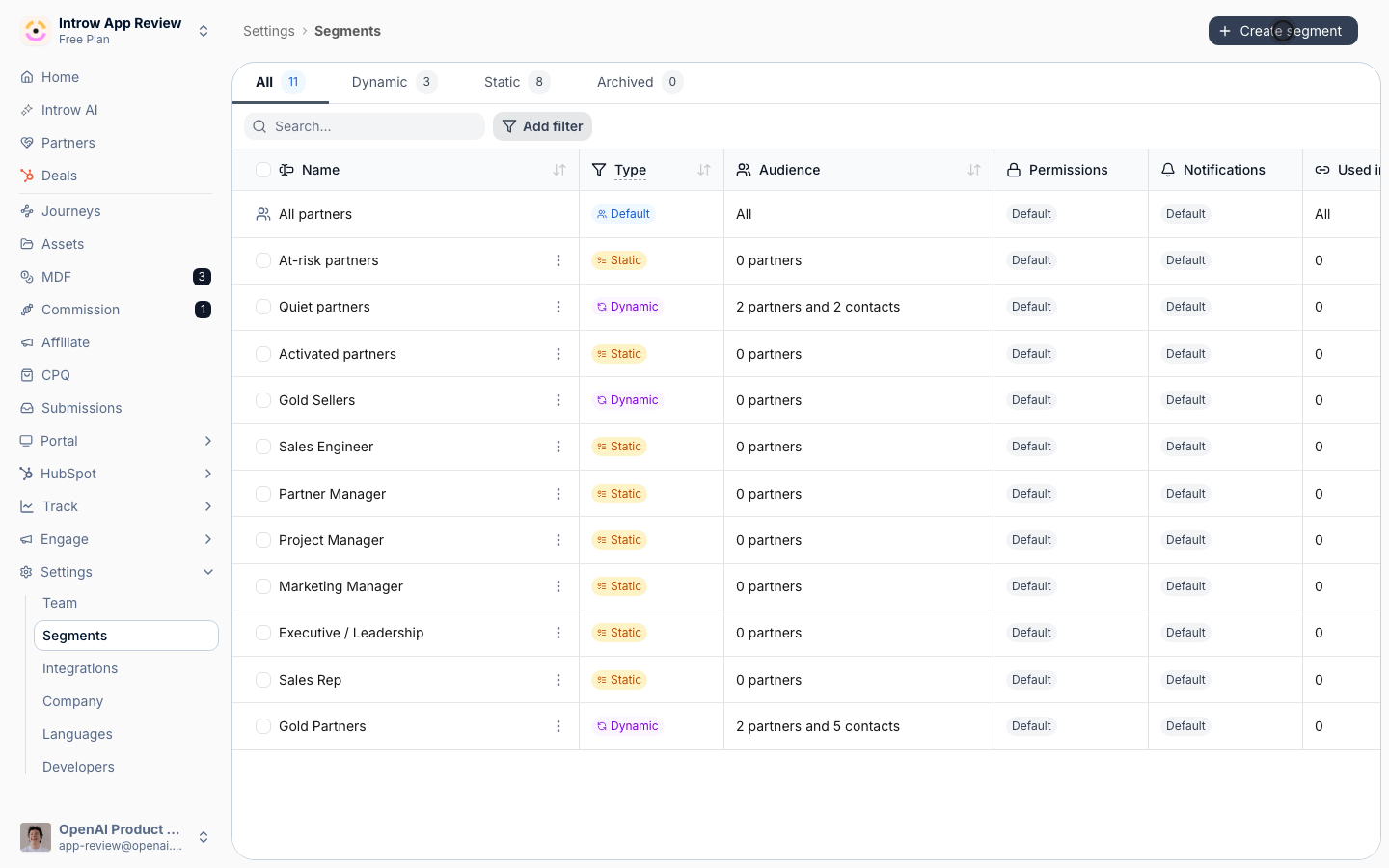
2
Name the segment
On the General tab, fill in the basics: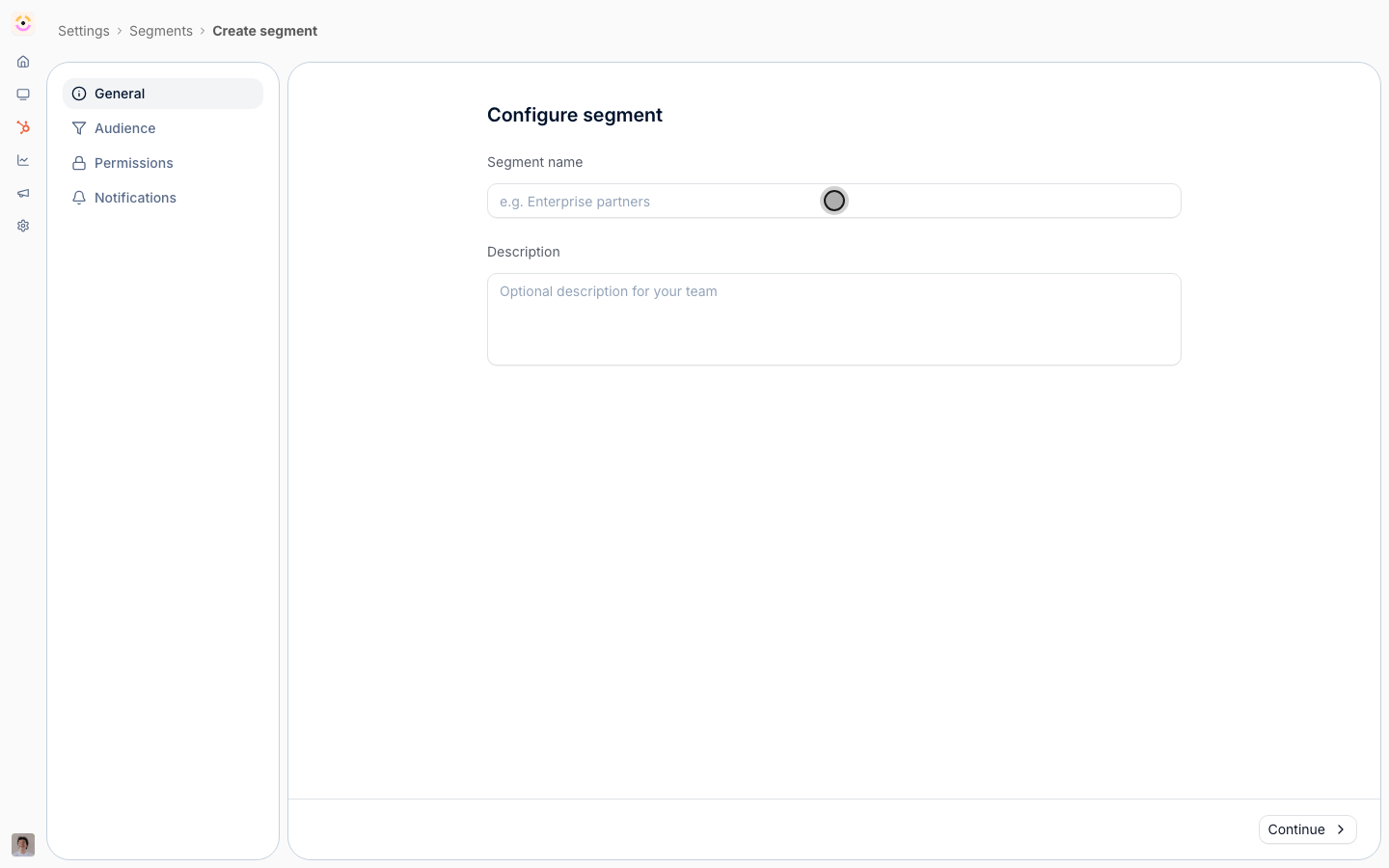
- Segment name - how the segment appears everywhere you use it. Required.
- Description - an optional note for your team about who this group is for.
3
Choose static enrollment
On the Audience tab, set Enrollment type to Static. Static means you hand-pick the members and the list stays exactly as you set it until you edit it, rather than following conditions.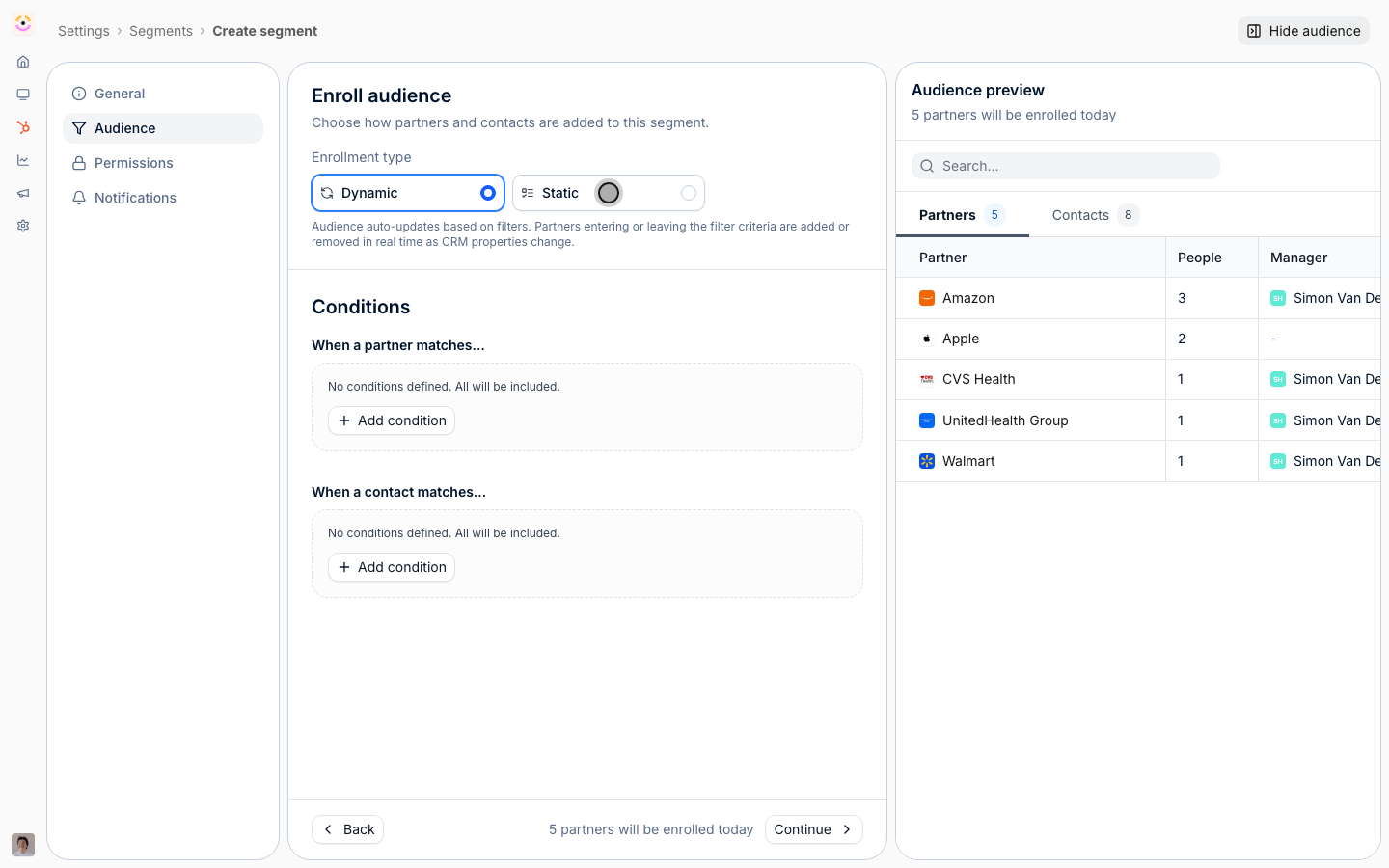
4
Select partners
On the Audience tab, check the partner organizations you want in the segment. The audience panel shows the running count of who will be enrolled, so you can confirm the group as you build it.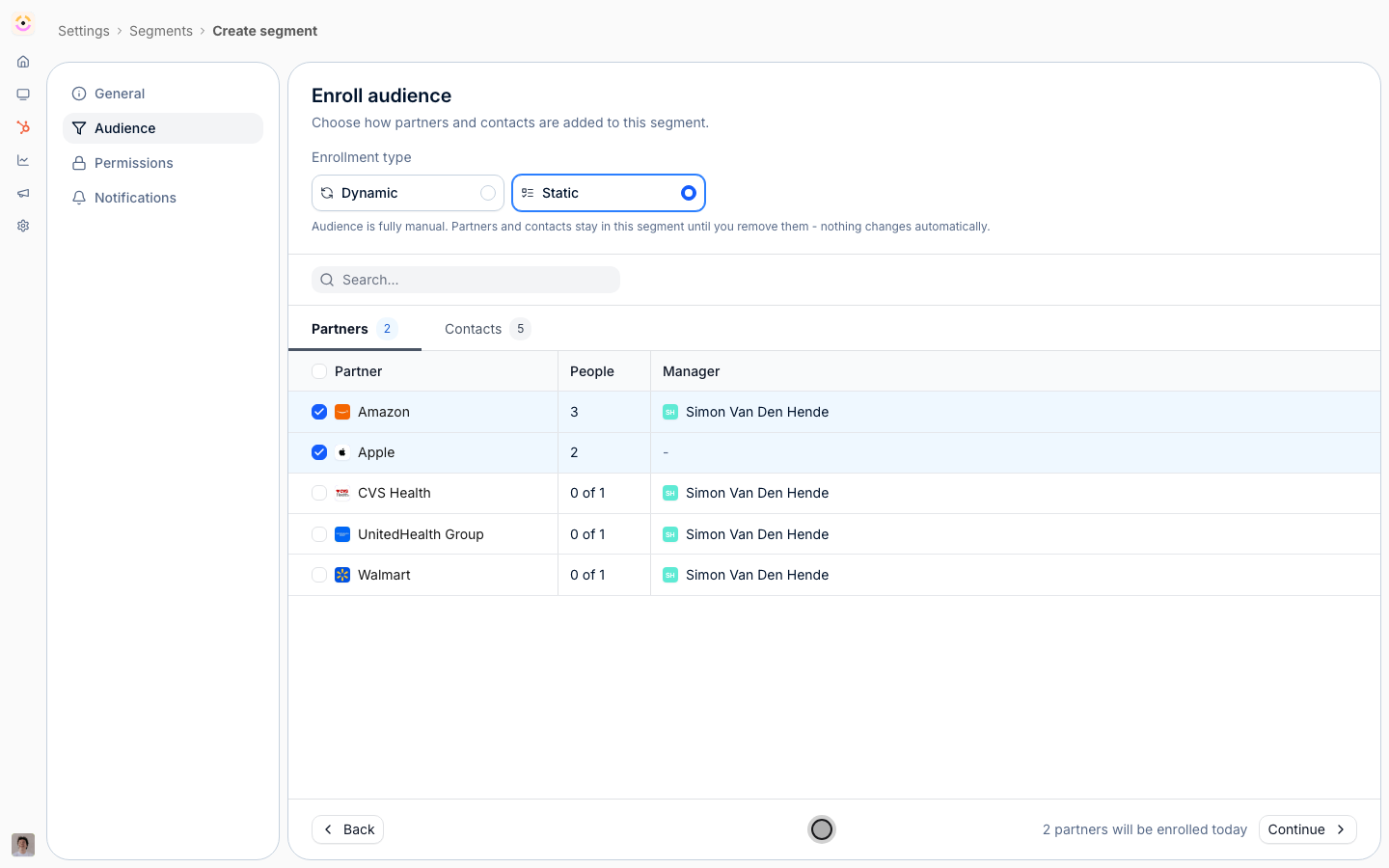
5
Refine the contacts
Switch the audience view to contacts to refine who is included from those partners. By default the contacts at the partners you picked are enrolled; check or uncheck specific people when you need a tighter set than “everyone at these partners”.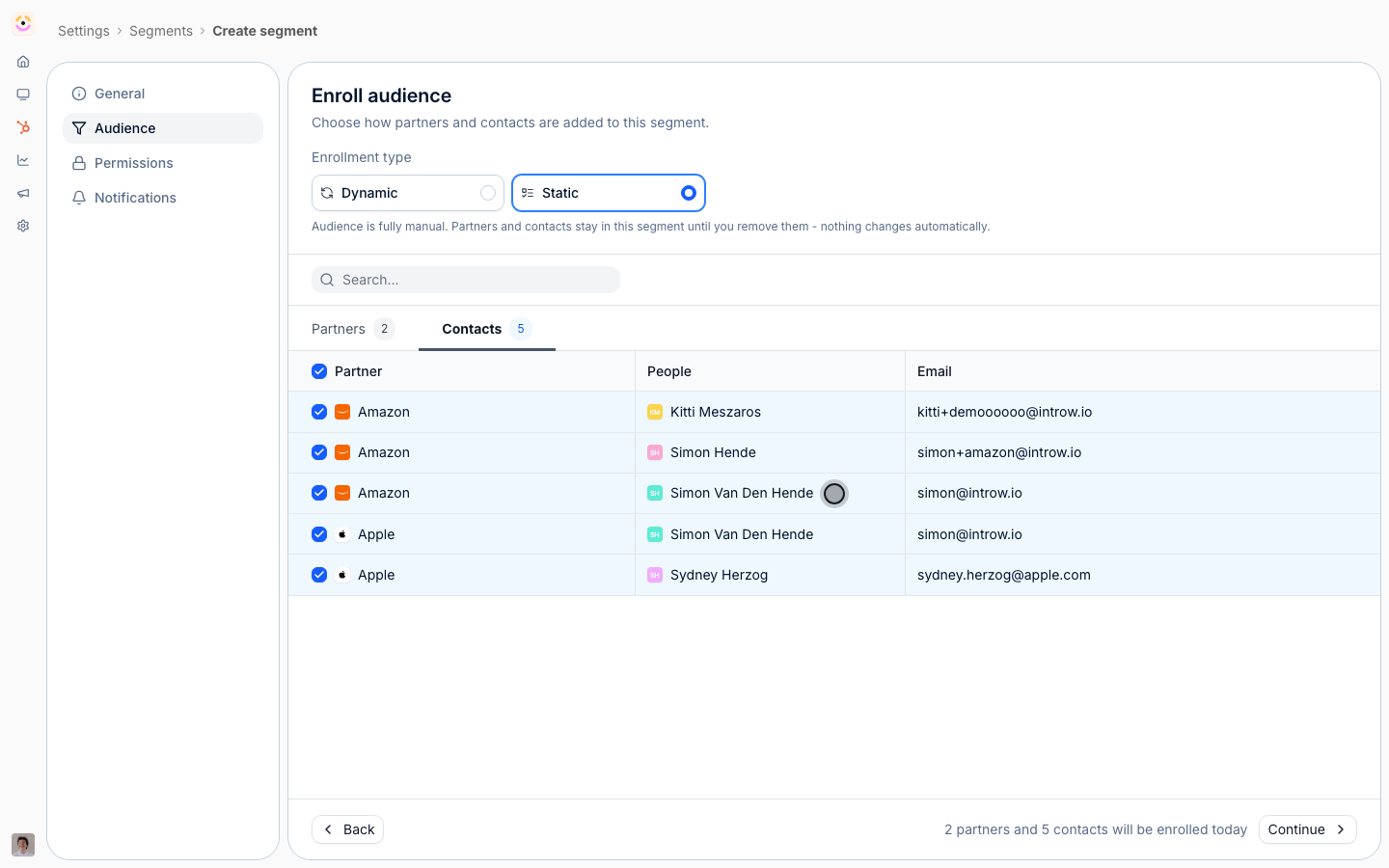
6
Set permissions
On the Permissions tab, switch on Override the default for this segment first. Until you do, the group follows your organisation default and the panel is read-only, showing you what its members currently get.Both are phrased as grants, so more permission always reads as on.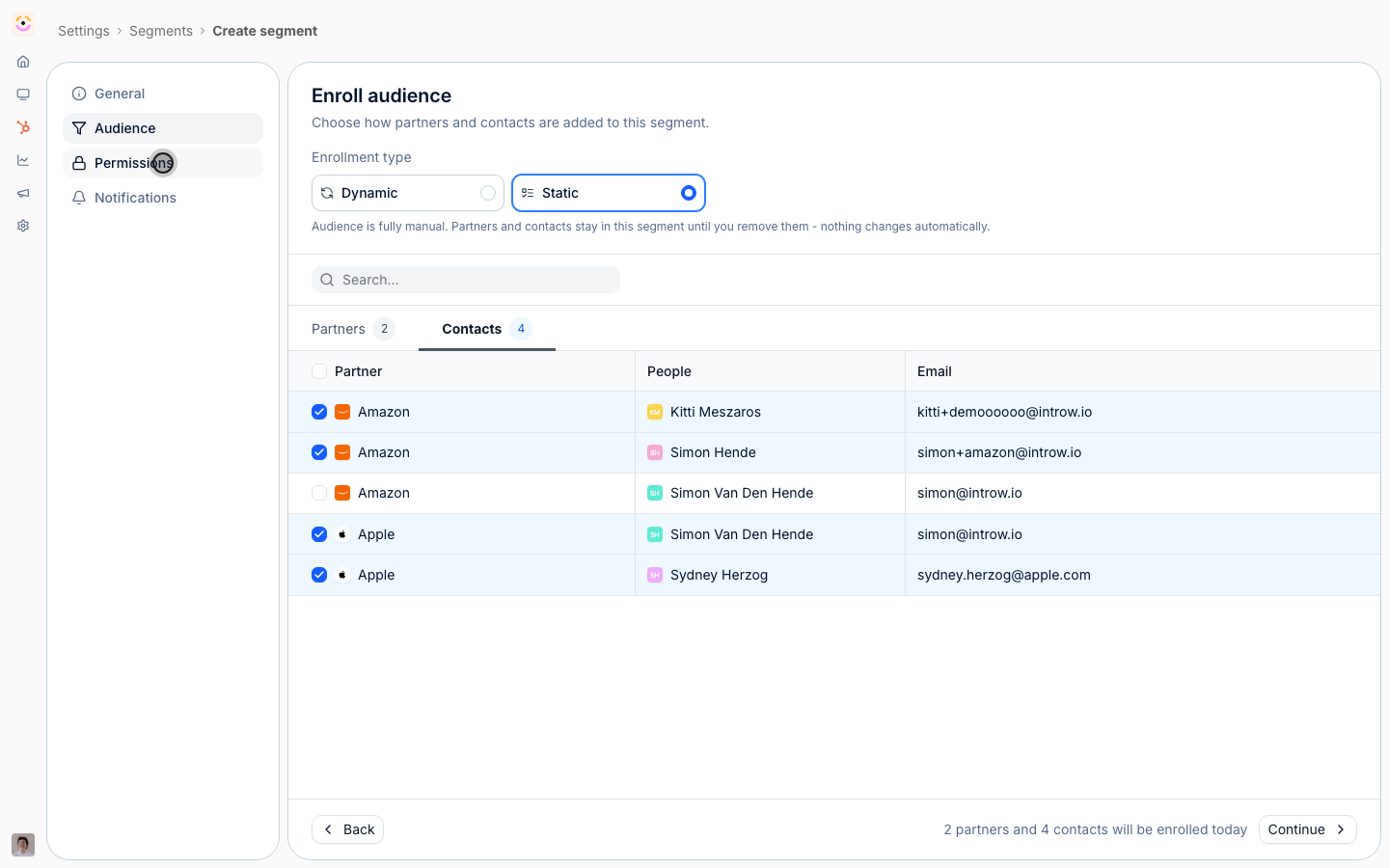
- Invite colleagues - lets these partners invite their own coworkers into the portal, and invited colleagues inherit the organisation default. The partner manager assigned to that partner is CC’d on every invite they send.
- See all shared records - when on, a contact sees everything shared with their company. Turn it off and they see only the records they are assigned as a collaborator on, with notifications following that access.
Each card says which side of your default it is on, and moving it back is how the segment goes back to following the default. Across overlapping segments both resolve the same way, most-permissive: an invite grant in any of them wins, and See all shared records switched on in any of them wins.
7
Tune notifications
On the Notifications tab, switch on Override the default for this segment, then set the recipients per event (announcements, comments, new records, task nudges, object updates, sleeping-deal nudges, submission outcomes, course and certificate events): All partners, Collaborating only for events attached to a CRM record, or Disabled. Change only the events that should differ from your default; the rest inherit it. For contacts in several override segments, the most allowing opinion wins: an event turned on in any of them reaches the contact, even if another turns it off. This tab is email only, since chat is set per platform on the chat integration. See Channels.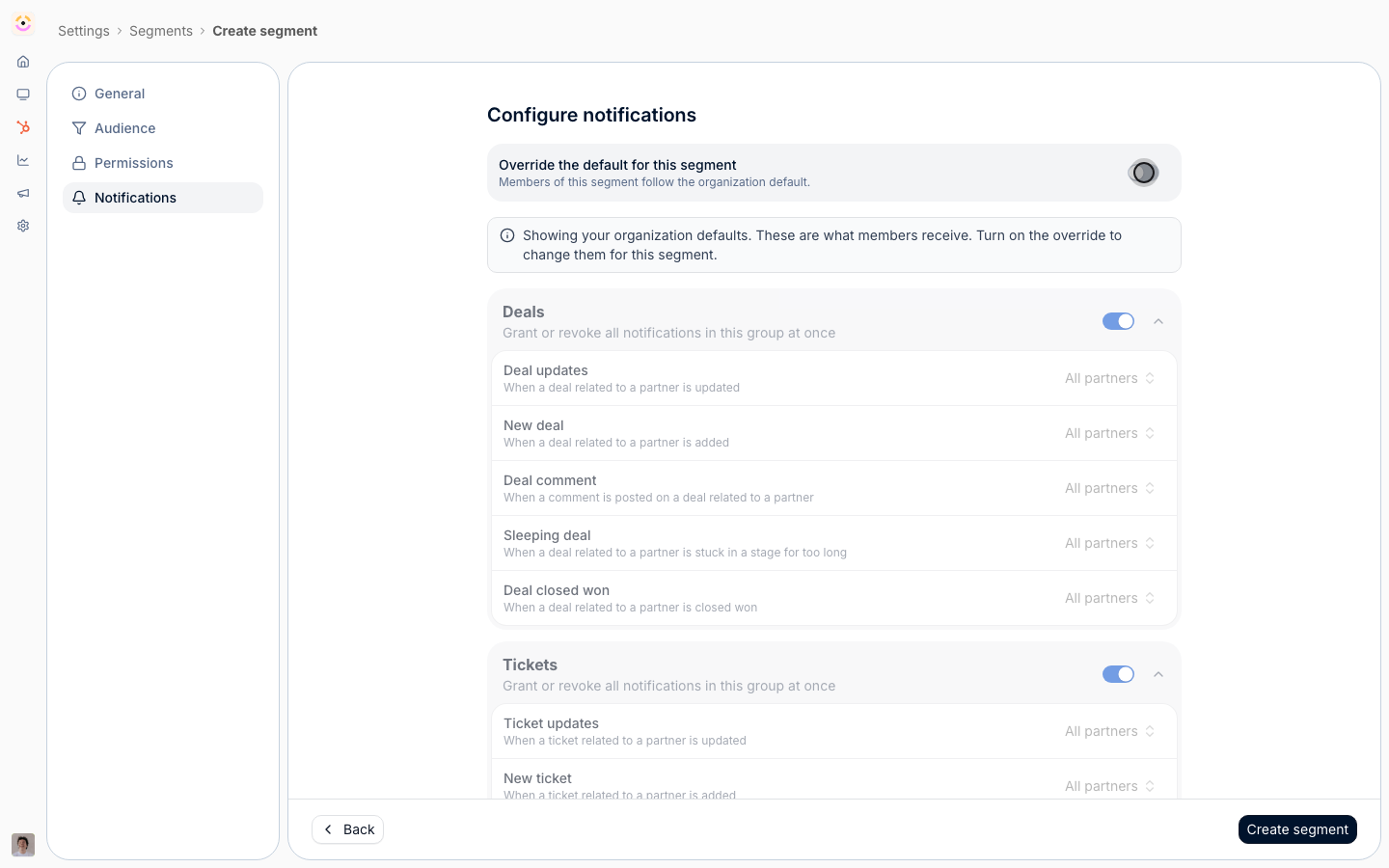
8
Save the segment
Save to create the segment. The list stays exactly as you set it, with the permissions and notification settings applied to that group.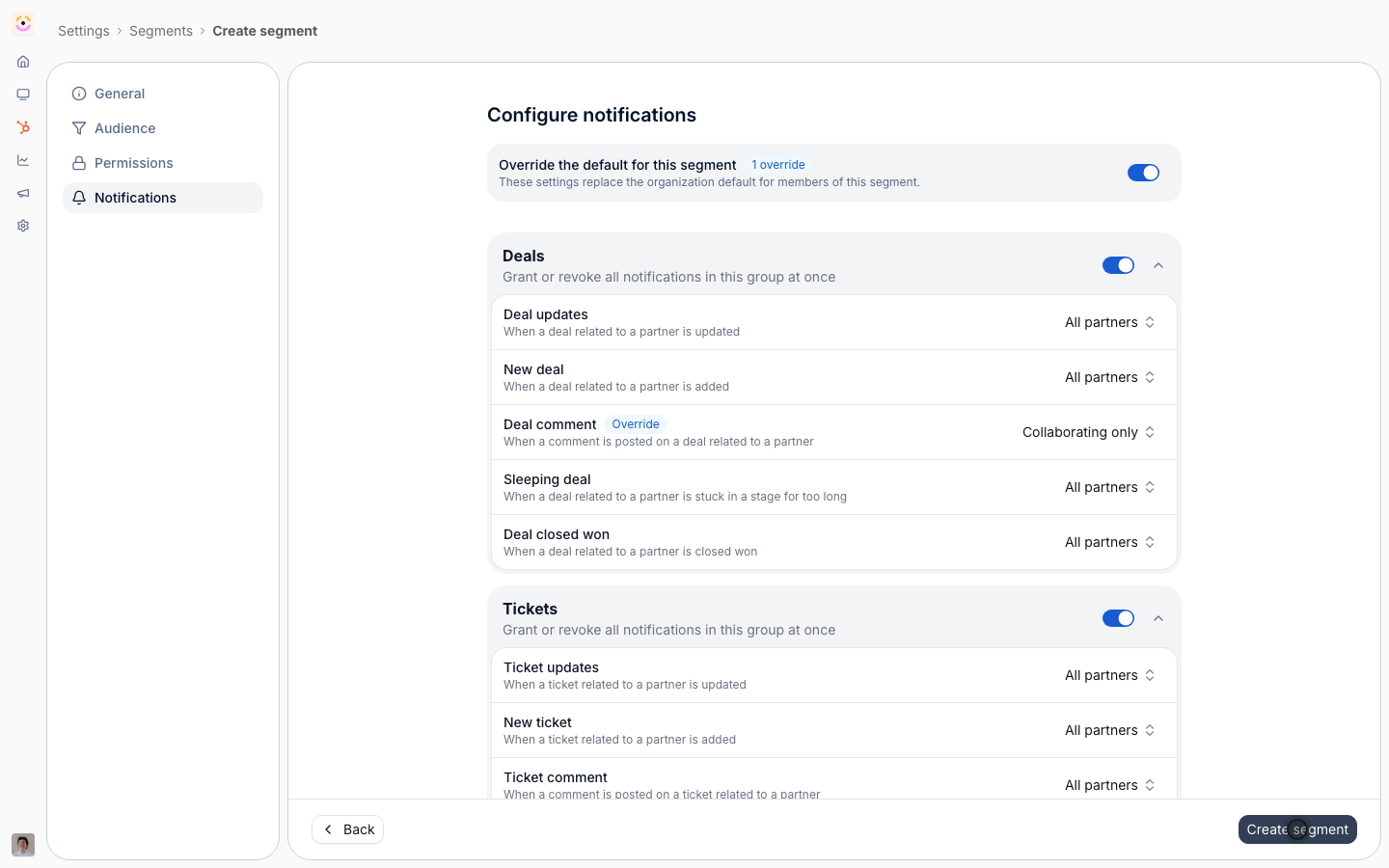
9
Update when the group changes
Come back and add or remove members whenever the group changes; static segments do not update on their own.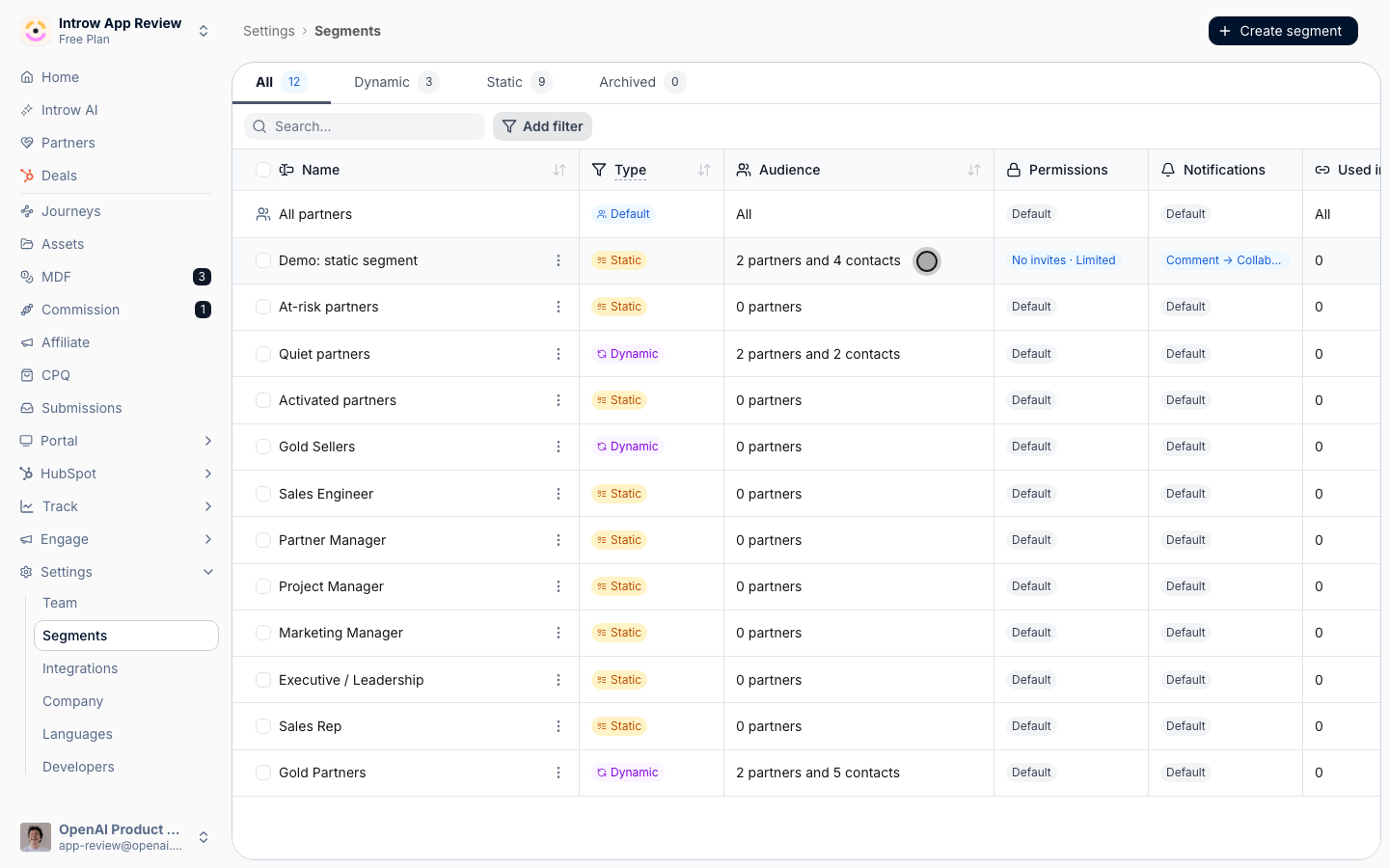
Verify it worked
The segment on Segments contains exactly the partners and contacts you selected, and shows where it is used across the product so you can check its reach before editing or deleting it.Related
Create a dynamic segment
Let conditions define the audience instead.
Restrict a tab to segments
Use the segment to gate portal content.
Layer segments to progressively unlock capabilities
How overlapping segments resolve, and how to design around it.
Implementation reference
Full configuration options for segments.